

Most people assume whale watching boats rely on some kind of sophisticated tracking technology — radar sweeping the surface, sonar pinging the depths. The real answer to how whale watching boats find whales is at once simpler and more interesting than that: it’s a combination of trained observation, deep knowledge of animal behavior, local geography, and real-time communication between crews on the water.
That’s especially true in Maui, where Hawaii Ocean Rafting has spent over 30 years learning the rhythms of the Au’au Channel — when whales congregate, how they move through the area, and how to spot a whale in the ocean.
Let’s take a look at how our whale watching boats find whales and what that means for the whale watching experience you have on board.
Where Is the Best Place to Find Whales in Maui?

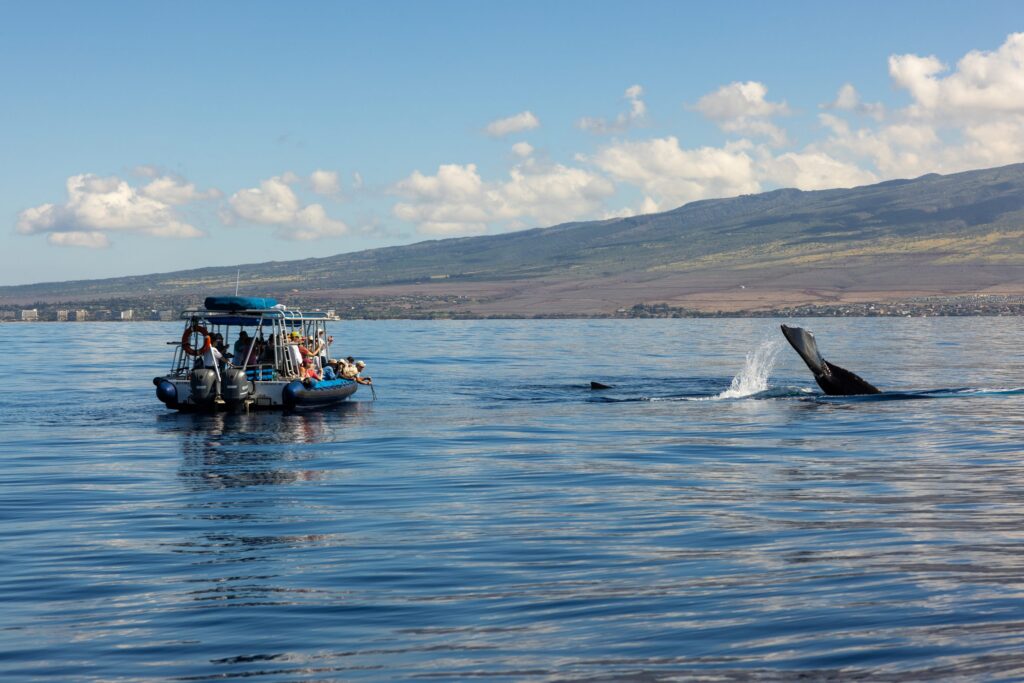
The best place to see whales in Maui is the Au’au Channel — the stretch of ocean between Maui, Lāna’i, and Moloka’i that sits at the heart of the Hawaiian Islands Humpback Whale National Marine Sanctuary. Every winter, humpback whales return to these specific waters for a reason, and understanding that reason is the first step in understanding how whale watching boats find whales.
Humpback whales come to the Au’au Channel for its warm, shallow, protected water, where whale calves can develop strength before the long migration north. It’s naturally sheltered, relatively shallow compared to the open ocean, and enclosed by islands that buffer swell and wind.
That geography works in our favor, too. Because the channel is a defined, enclosed area, whales concentrate here in numbers that would be impossible to find in the open ocean. We’re not searching blindly. We’re working within a known habitat during the time of year when it’s most active.
What Signs Do Whale Watching Boats Look for on the Water?
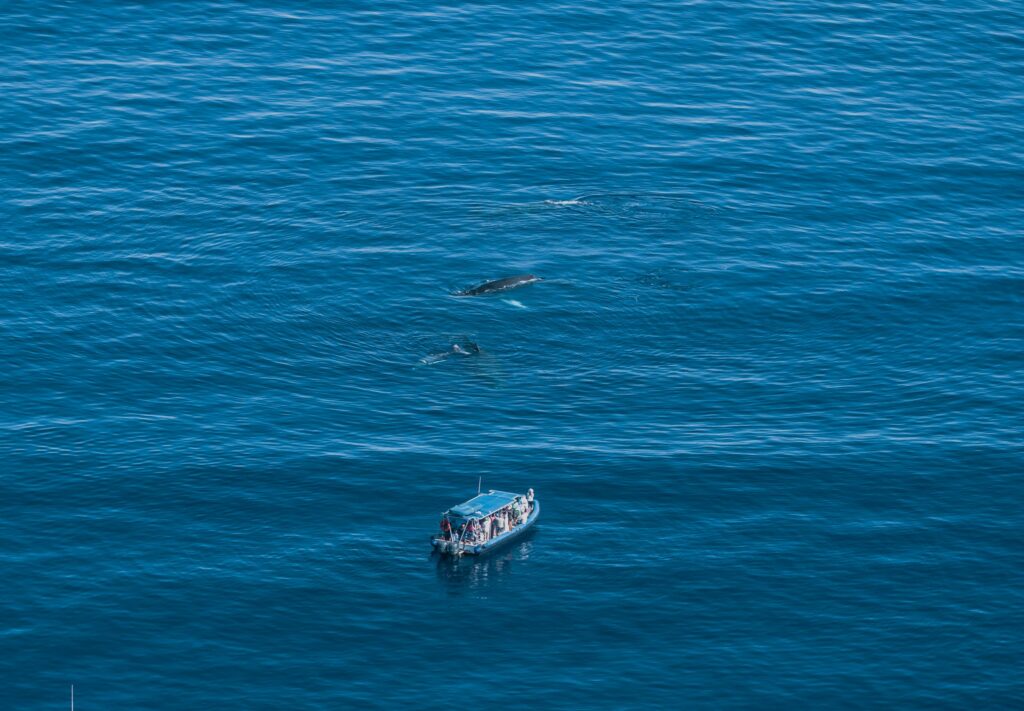
Being in the Au’au Channel puts us in the right neighborhood, but humpbacks are large, wild animals in a lot of open water. Our crew uses a combination of real-time communication, visual scanning, and reading the surface of the water to zero in on where whales are moving at any given moment.
- Radio Communication Between Groups: Captains operating in the channel share real-time whale sighting information throughout the day over VHF radio. If a boat that departed an hour before us has whales alongside, we know about it.
- Blows and Spouts: A humpback’s blow — the burst of mist exhaled when it surfaces — is the most reliable visual signal we have. On a calm day, a blow can be visible from miles away. We scan the horizon for them constantly from the moment we leave the harbor.
- Whale Footprints: When a humpback dives, it leaves a slick, glassy circle on the surface called a footprint. This footprint is caused by the turbulence of its powerful tail moving underwater. A fresh footprint tells us exactly where a whale just was and gives us a strong indication of where it’s headed.
- Surface Disturbances: Not all splashes look the same. A pec fin slap, a tail throw, or the white water from a breach each has a distinct visual signature that our experienced crews recognize immediately.
How to Spot a Whale in the Ocean: What to Look For Up Close
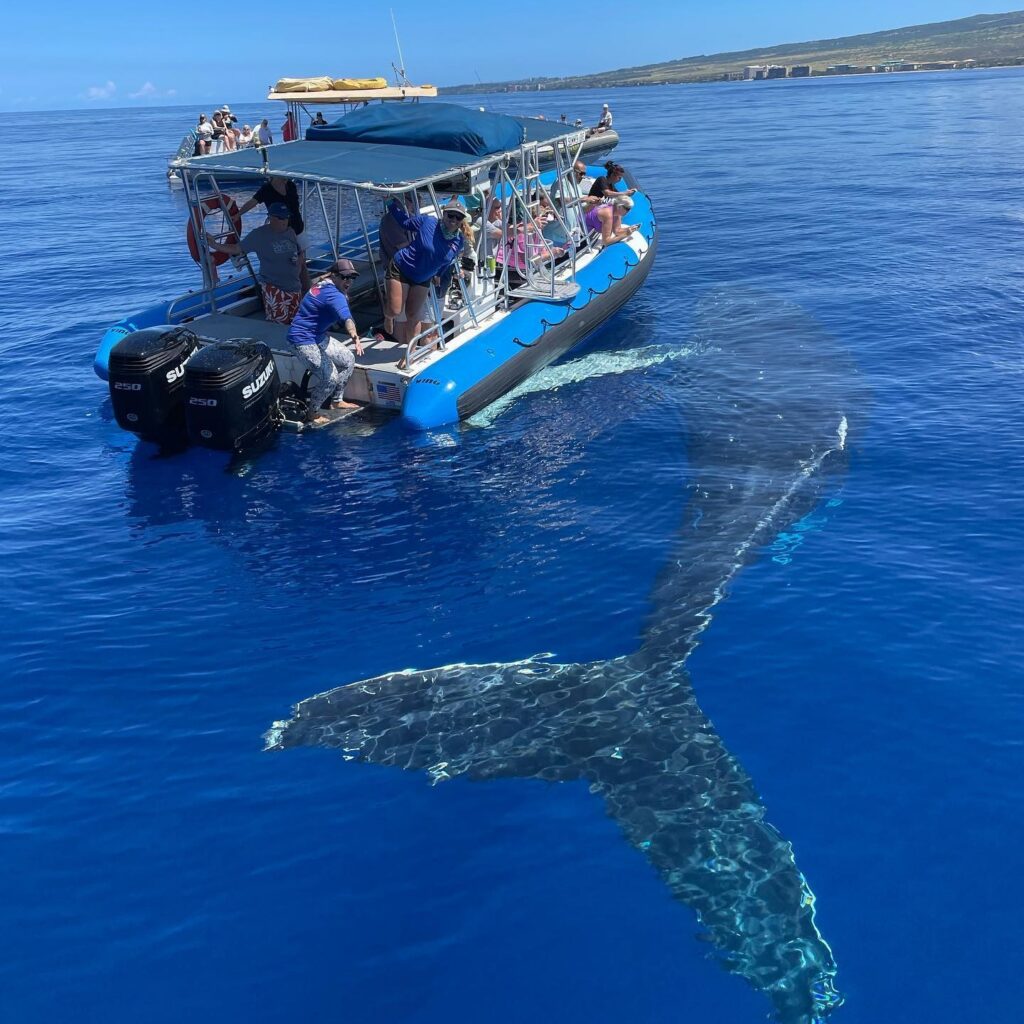
You’d think a 40-ton animal would be hard to miss. And sometimes they are — a full breach leaves no room for doubt. But humpbacks are dark, the ocean surface is constantly shifting light and shadow, and a whale rolling quietly at the surface can look a lot like a wave if you’re not sure what you’re looking for. Guests are often surprised by how close a whale can get to a whale watching tour boat before they notice it.
Our whale watching crew’s best advice for how to spot a whale in the ocean:
- Resist the urge to fixate on one spot and instead let your gaze go wide and soft.
- Watch for movement, not shape and size. A dark shape that moves differently from the water around it, a column of mist that appears and disappears quickly, or a disturbance that doesn’t look quite like a wave — any of these is worth a second look.
- Once a whale goes down, keep your eyes on that general area. Humpbacks typically surface to breathe every 10 to 15 minutes, so the next surfacing usually isn’t far away.
Our crew tracks whale direction and behavior constantly, and they’ll always point you toward the action. But half the fun is spotting one yourself — and once your eyes adjust to the water, it happens more than you’d expect.
Here are a few humpback whale behaviors you might see when you spot a whale in the ocean: breaching, spyhopping, and tail slapping.
What Is Whale Breaching?
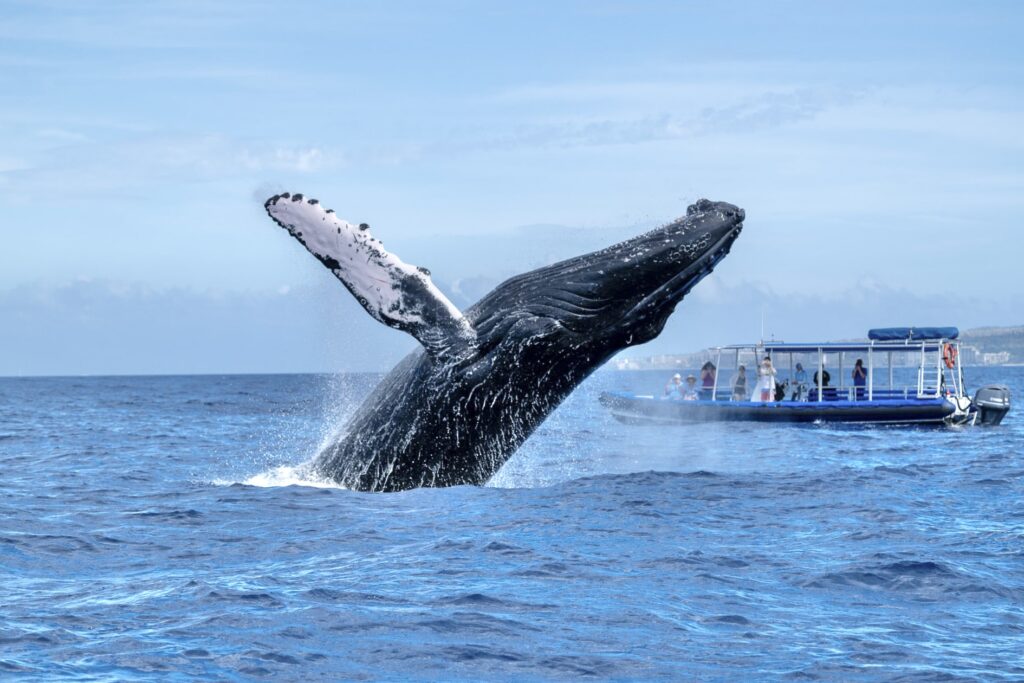
A breach is when a humpback propels most or all of its body out of the water — up to 40 tons of animal launching into the air before crashing back down. It’s the most visually dramatic behavior you’ll see on the water, and the impact is something you feel as much as hear.
What Is Spyhopping in Whales?
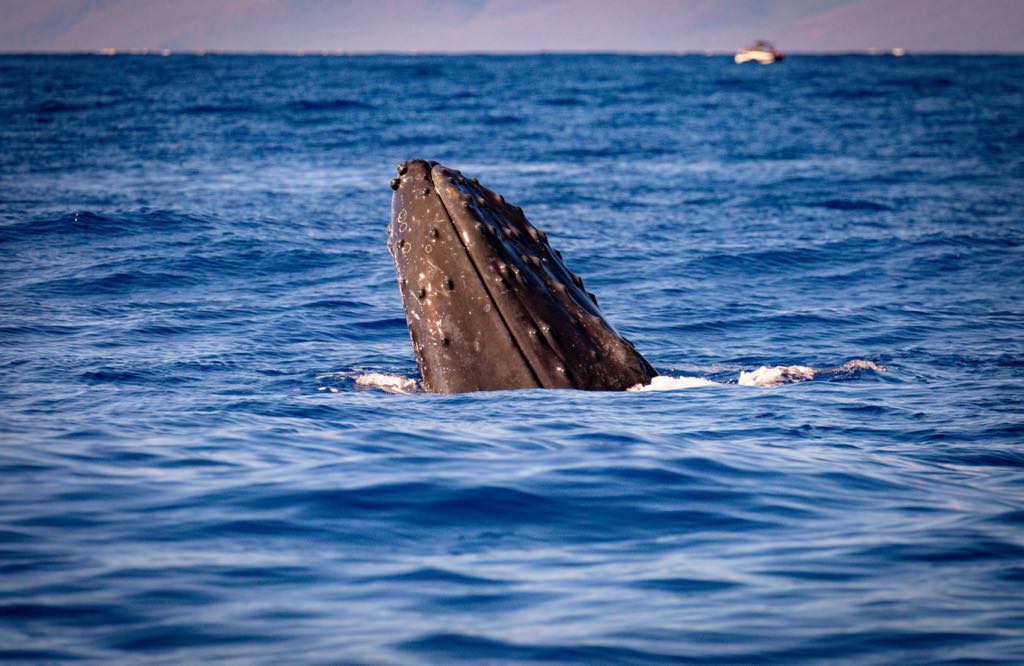
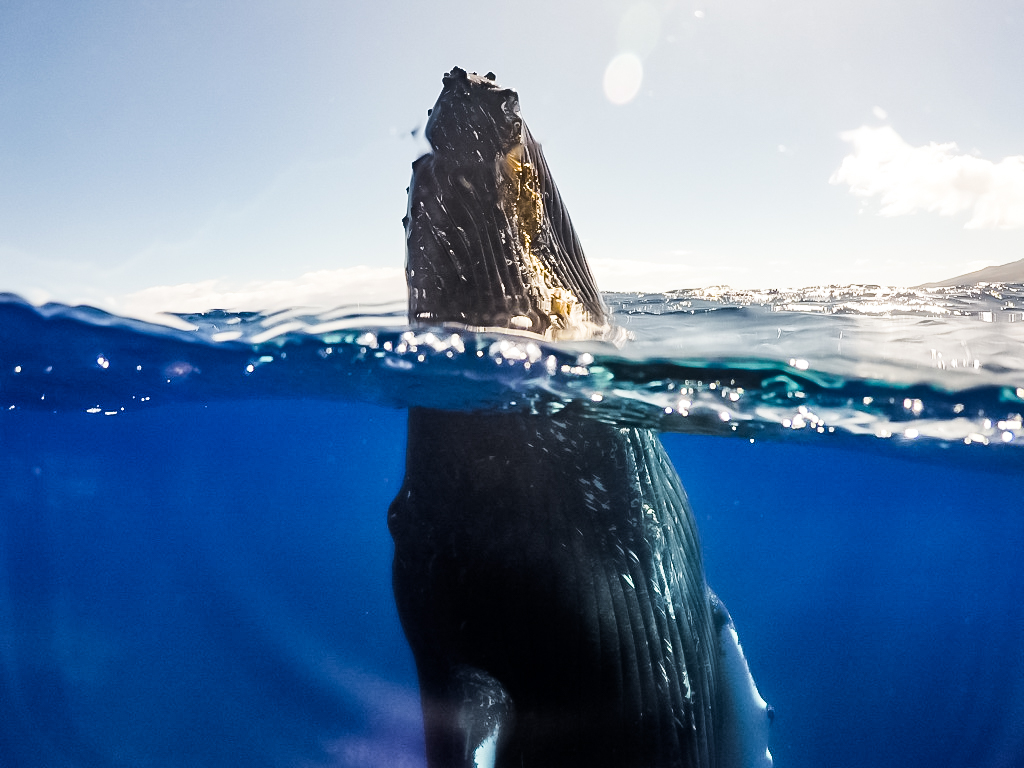
Spyhopping is when a whale rises headfirst out of the water until its eyes clear the surface, holds the position for several seconds, then slips back down with very little splash. Scientists believe that whales spyhop to observe what’s happening above the waterline — so if it feels like they’re looking at you, they very likely are!
On a Maui whale watching boat tour, being on the receiving end of a spyhop from a curious whale is a surreal moment that guests talk about long after they return home.
What Does It Mean When a Whale Slaps Its Tail?
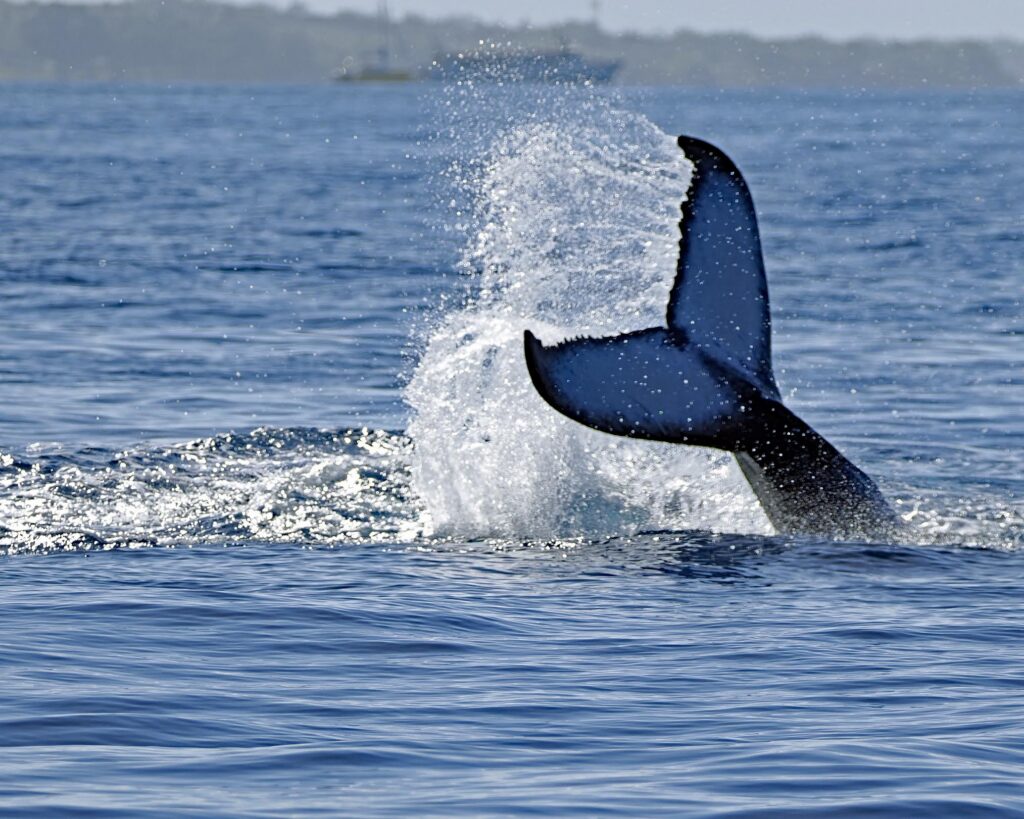
Tail slapping — also called lobtailing — is exactly what it sounds like: a humpback lifts its fluke and brings it down hard against the surface, producing a crack that carries a long way across open water. It’s thought to serve a communicative function, particularly in social situations, and it’s one of the behaviors our crew listens for as much as watches for.
If you want to dive deeper into humpback whale surface behavior, check out our guide: Whale Surfacing Behaviors That Are Totally Cool To Watch.
Ready to Experience It Yourself? Get On the Water with a Maui Whale Watching Boat Tour

Eye-Level Whale Watch Eco-Raft Tour
Get eye-level with humpback whales on a small-group eco-raft tour, with an expert local crew bringing the whole experience to life. December through April.
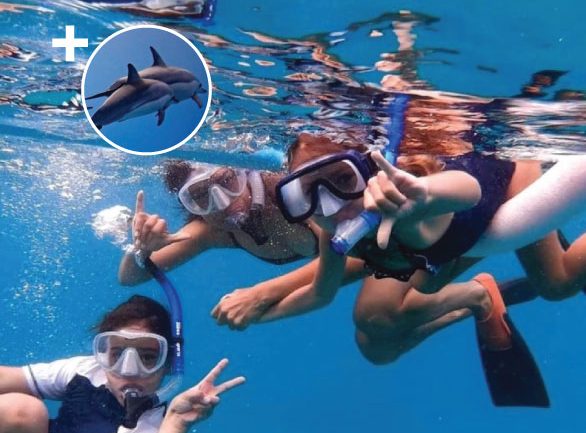
2n1 Snorkel & Whale Watch Eco-Raft Tour
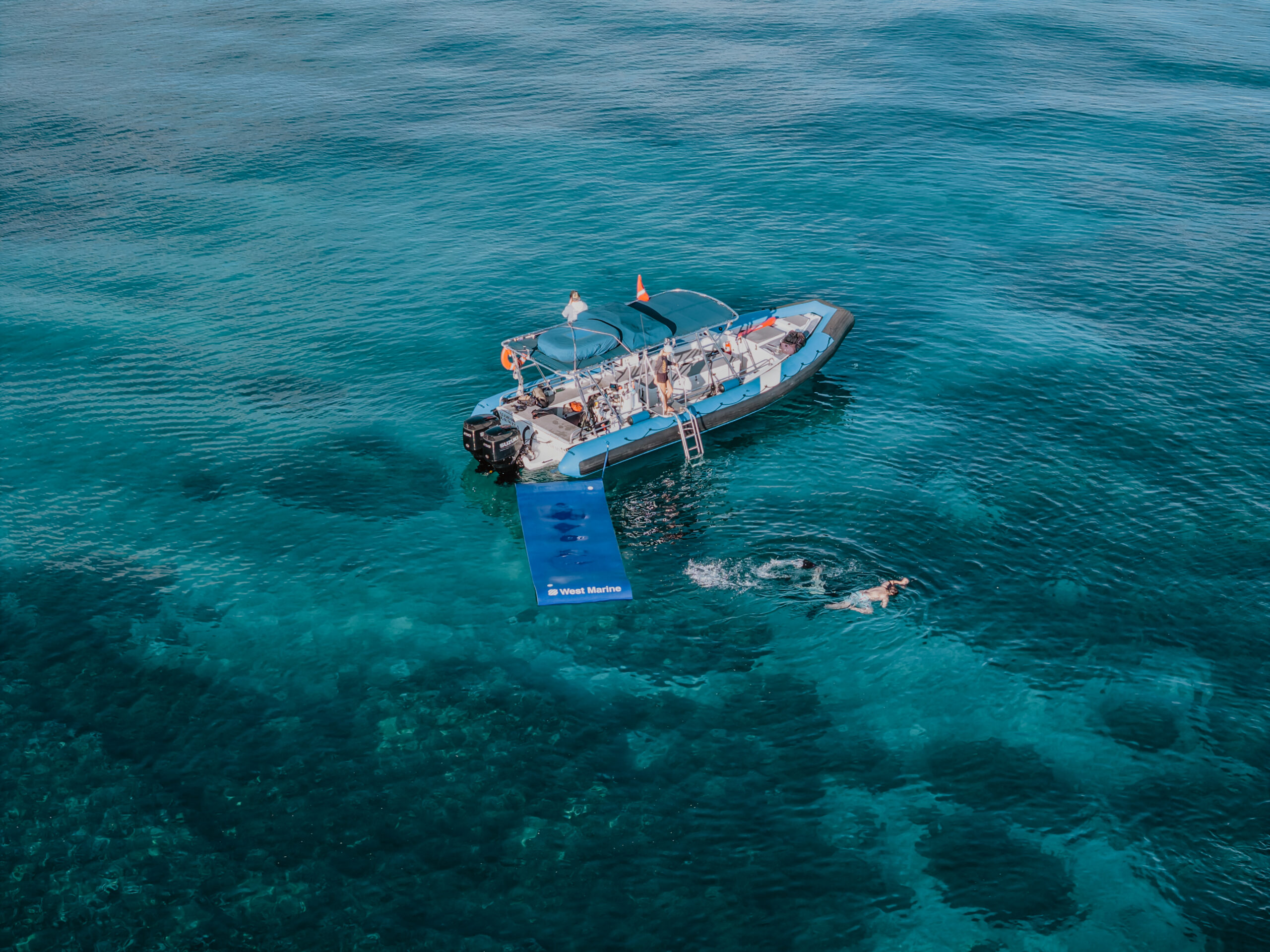
Spend a half day doing two of the best things you can do on Maui’s ocean — watching whales and snorkeling — back to back. December through March.
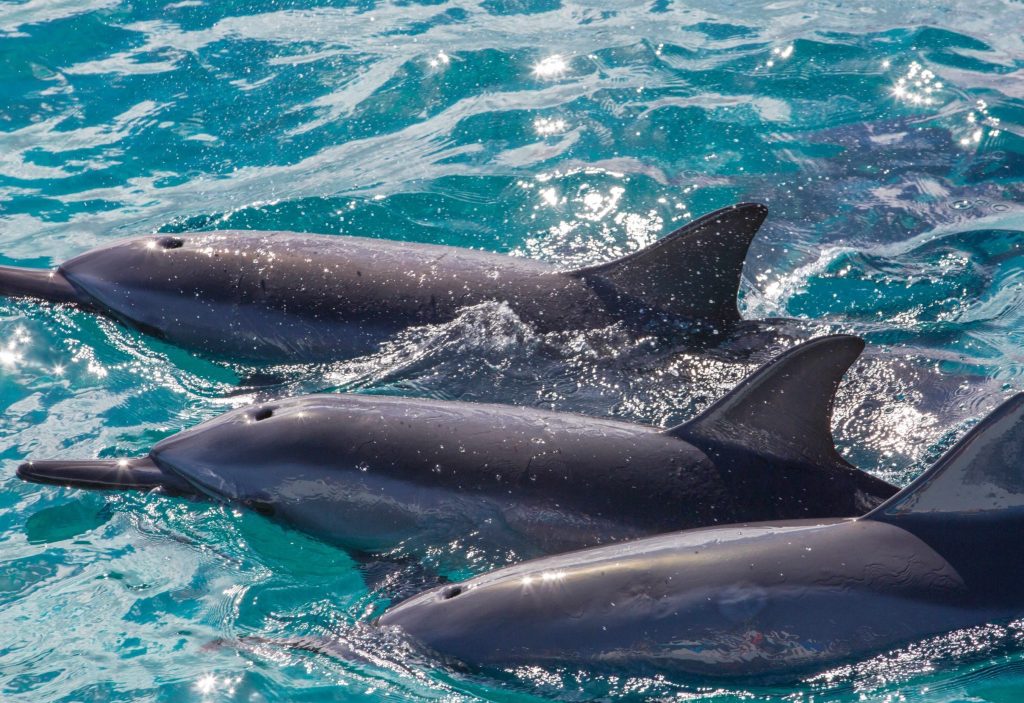
Dolphin/Whale Search & Sightsee Eco-Raft Tour
When humpback season wraps, the ocean is still full of marine life. Join a small-group search for whales, dolphins, and porpoises on the same low-to-water rafts. May through November.
Finding Whales with an Experienced Maui Whale Watching Boat Crew
Finding whales is part science, part local knowledge, and part years of pattern recognition on a specific body of water. The crews that do it best aren’t lucky — they’re prepared.
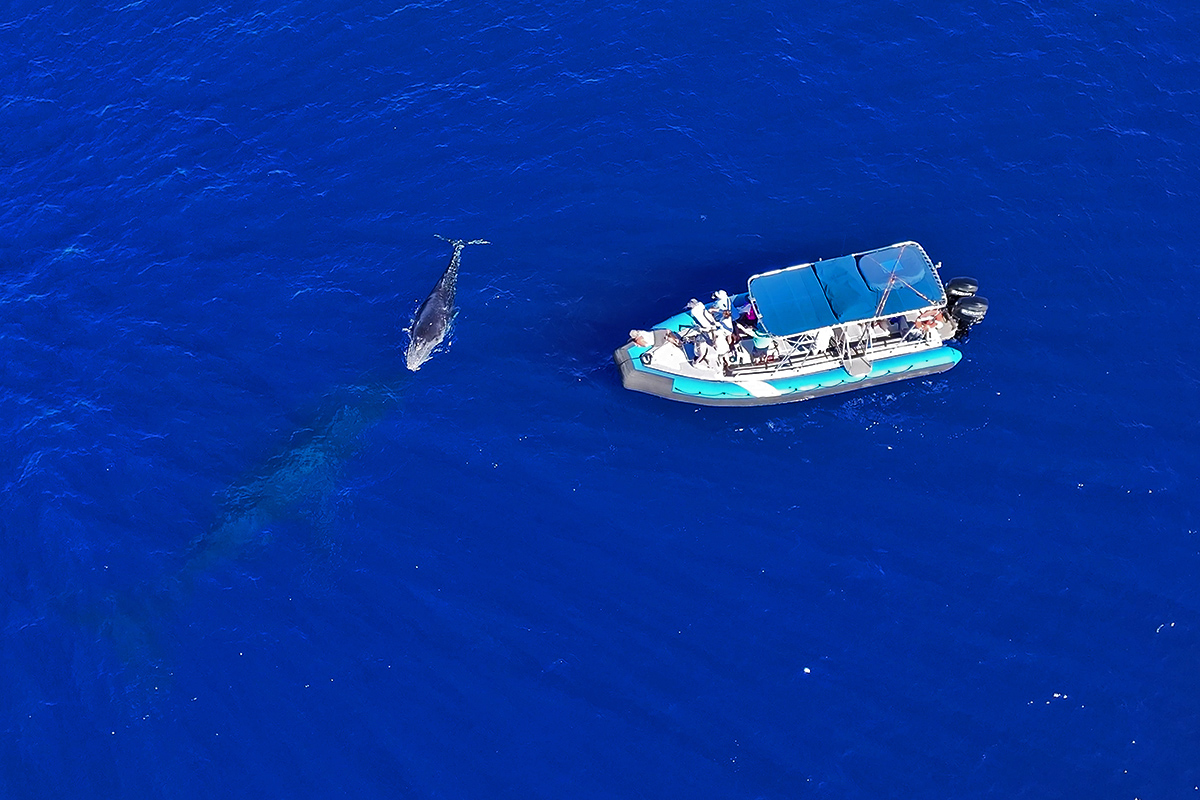
At Hawaii Ocean Rafting, our Maui whale watching tour captains and marine naturalists know where whales congregate at different points in the season, how to track a dive, and how to position the boat so guests are close to the action when it happens.
Our low-to-water eco-rafts are nimble enough to move fast when a blow appears on the horizon, and small enough to keep things personal when a whale surfaces alongside the boat.
Reserve your spot on a Hawaii Ocean Rafting whale watching tour and see the Au’au Channel the way it’s meant to be seen.