

Every winter, Maui’s waters fill up with humpback whale calves. Thousands of humpbacks make the long swim down from Alaska to the Au’au Channel between Maui and Lāna’i, and many of them arrive pregnant (or ready to be). For a few months, this warm, calm stretch of coastline turns into one of the most important humpback whale calf nurseries on the planet.
That channel is, more or less, our office. We’re a Native Hawaiian–owned crew running small-group eco tours by raft out of Lahaina, and we’ve watched baby whales grow up in these waters for more than thirty years. From their first breaths to their first clumsy leaps, these humpback whale calves give us a front-row seat to one of the ocean’s great rituals, and it never stops feeling like a privilege.
There’s a lot to know about these young whales before you come looking for one, so let’s start at the very beginning.
What Is a Baby Whale Called?
A baby whale is called a calf (or calves, when there’s more than one). Hawaiian has its own name for baby humpback whales specifically: keiki koholā, from keiki (which means “child”) and koholā (a word meaning “whale,” or more specifically “humpback whale,” in Hawaiian). The phrase translates almost exactly to “baby whale.” A Maui research group devoted to protecting humpback whale mother and calf pairs, the Keiki Kohola Project, draws its name from those same two words.
Koholā have held a place in Hawaiian culture for generations, a respect our crew still carries onto the water each winter. Learn more in our guide to humpback whale symbolism and significance in Hawaiian culture.
What Does a Humpback Whale Calf Look Like?
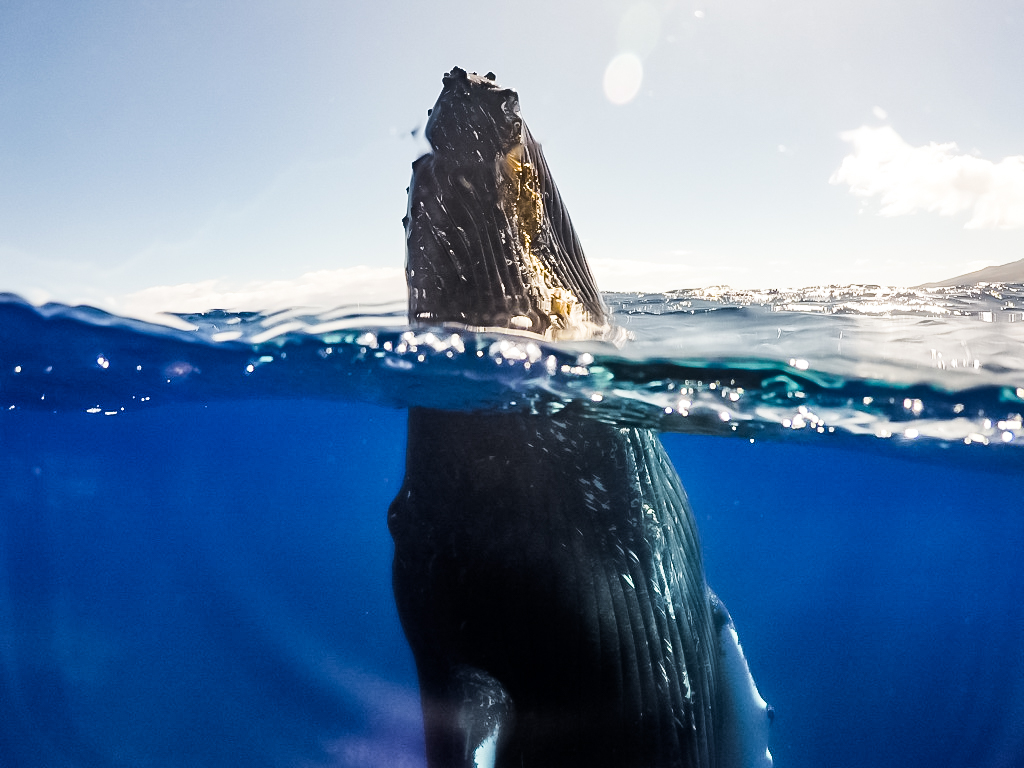
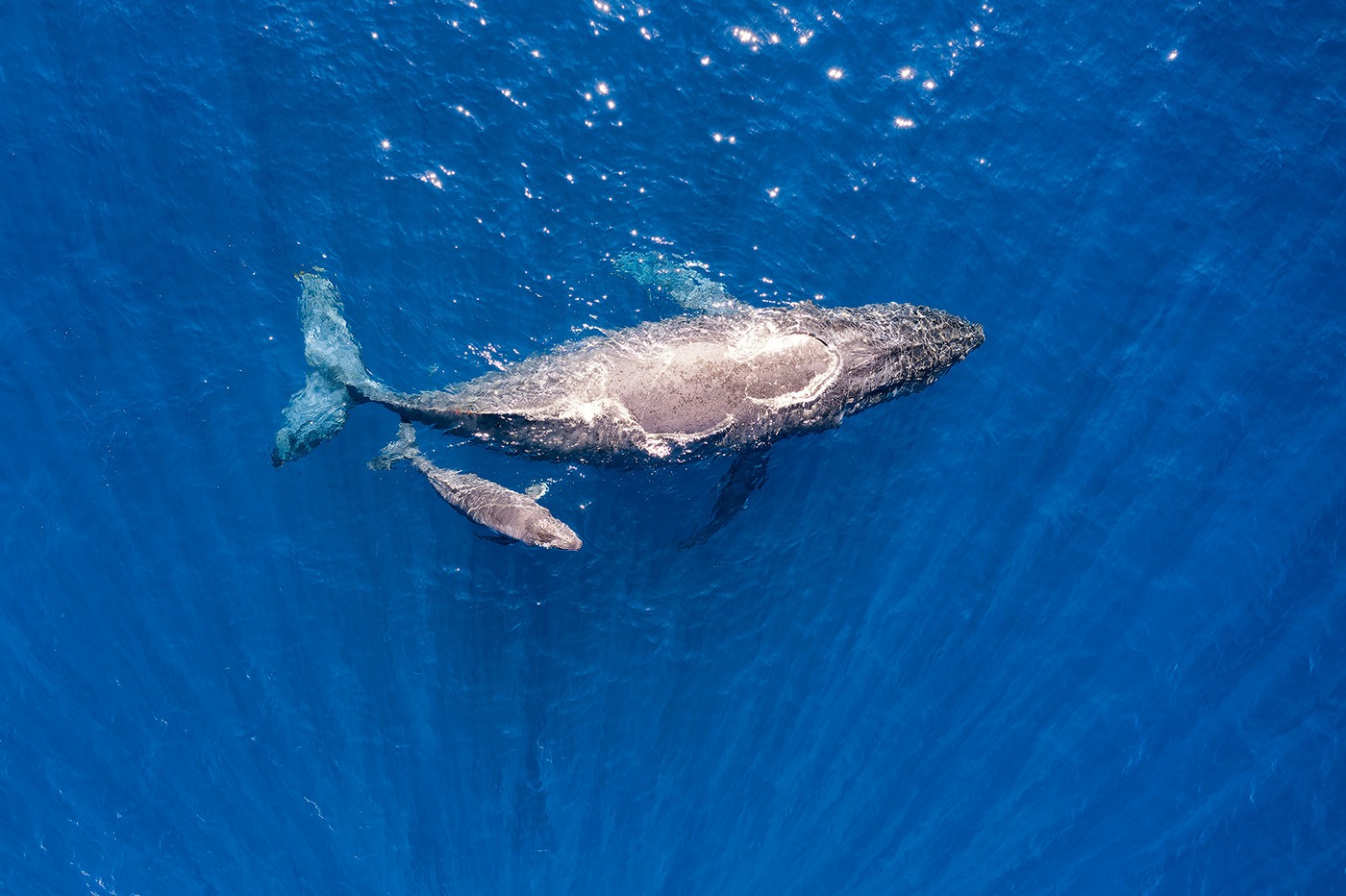
A humpback whale calf looks like a smaller, paler version of an adult. Newborns run light grey, sometimes almost white underneath, and darken as they grow. Most show off a few newborn giveaways: pale, floppy pectoral fins, a furled-over dorsal fin, and a small dimple at the back of the neck. Some still show fetal folds (pale crease lines left from months curled up in the womb) that fade as the calf fills out.
Our naturalists use a simple trick on the water to gauge a baby whale’s age: the dorsal fin. Researchers with the Keiki Kohola Project note that it steadily unfurls from birth, and a humpback whale calf with a fully erect dorsal fin has usually grown strong enough for the migration north. Spot one of those, and that young whale has likely entered its final Maui weeks before the long trip back to Alaska.
How Big Are Baby Whales?
Baby whale size varies dramatically by species. A newborn orca and a newborn blue whale both enter the ocean as “calves,” but they arrive worlds apart in scale. Across all whale species, newborn calves range from around 6 feet and a few hundred pounds to over 20 feet and several tons. Most arrive at around a quarter to a third of their mother’s length, so even the smallest whale calf dwarfs nearly any baby on land.
- Orca (killer whale) calf: Newborn orca whales are ~8 feet long at birth, roughly the length of a standard door laid flat.
- Sperm whale calf: Sperm whale calves measure to ~11-14 feet in length, about the length of a recreational kayak, the biggest of the toothed-whale newborns.
- Humpback whale calf: Baby humpback whales are ~13–16 feet long, comparable in length to a compact car.
- Fin whale calf: Newborn fin whale calves measure ~18–20 feet, around the height of an adult giraffe.
- Blue whale calf: Baby blue whales are about ~23 to 25 feet at birth, roughly the length of a stretch limo, and the largest baby on the planet.
How Much Does a Baby Whale Weigh?
A baby whale weighs anywhere from about 150 pounds to roughly 3 tons (6,000 pounds) at birth, depending on the species. Blue whale calves are the heaviest newborns in the animal kingdom, while belugas sit at the light end. Most calves arrive weighing around 3 to 4 percent of their mother’s body weight.
- Orca (killer whale) calf: Newborn orcas weigh ~350–400 pounds, about the weight of a gorilla.
- Sperm whale calf: Sperm whale calves come in around ~1 ton (2,000 pounds), roughly a draft horse.
- Humpback whale calf: Baby humpback whales weigh ~1 to 1.5 tons (2,000–3,000 lbs), comparable to a compact car.
- Fin whale calf: Newborn fin whales tip the scales at ~2 tons (4,000 pounds), about the weight of an SUV.
- Blue whale calf: Baby blue whales arrive at ~3 tons (6,000 pounds), roughly the weight of a small moving truck, and the heaviest newborn on Earth.
How Do Humpback Whale Mothers Care for Their Calves?
Humpback mothers are hands-on parents. Their gestation period lasts 11-12 months, and after birth, baby whales depend on their mothers for almost everything. She nudges it to the surface for its first breaths, keeps it within a flipper’s reach, and guards it from predators.
Their bond even shapes how they talk: research shows that humpback whale mother and calf pairs trade faint grunts and squeaks — “whispers” that carry no farther than a football field — to stay together without alerting killer whales. By contrast, the male humpback’s song travels for miles.
How Many Babies Do Whales Have?
Whales almost always have a single calf at a time, and twins only occur in under 1% of births. How often varies by species: most calve every two to three years, while some, like sperm whales, give birth only every five to seven.
Humpbacks follow that pattern, raising one calf every two to three years, though a few mother whales conceive again soon after birth and calve in consecutive years. Whale birth itself stayed a mystery for decades. Scientists had seen the early stages, but no one had recorded a humpback’s full delivery anywhere — until the Keiki Kohola Project captured one start to finish between Maui and Lāna’i in 2021, the first ever documented.
At Hawaii Ocean Rafting, we’ve been fortunate enough to witness a humpback whale right after birth on one of our Maui whale watching tours — something almost no one ever gets to see. It’s one of the rarest privileges the ocean has offered our crew.
How Much Milk Does a Humpback Whale Calf Drink?
A humpback whale calf drinks about 11 to 15 gallons of milk a day, which is far less than the 100 gallons commonly claimed, a figure since corrected by the Keiki Kohola Project. What it lacks in volume, the milk makes up for in richness: close to 50% fat content, more than ten times richer than human milk, and as thick as sour cream.
That richness comes at a cost. Humpback whale mothers do not eat on the Maui breeding grounds, converting their own blubber into milk instead. A nursing mom can lose up to a third of her body weight before she travels back to the feeding grounds up north.
How Long Does a Whale Calf Stay with Its Mother?
Humpback whale calves stay close to their mothers for about a year, and they remain nearly inseparable through that first winter and the long migration north. Humpback mothers nurse their young for most of that time, weaning them around 11 months (though calves linger close even after, building the strength they’ll need on their own).
By the time the two part ways, that wobbly newborn baby whale has grown strong enough to take on the open ocean alone.
Baby Whale Behavior: Breaching, Play, and Learning
Whale calves spend their days in near-constant motion — breaching, slapping their tails, and rolling beside mom. Much of that play doubles as training. Whale calves breach partly to build myoglobin in their muscles, developing the breath-hold capacity they’ll need for the long migration. For the full story on these movements, our guide to humpback whale behavior breaks down what breaches, tail slaps, and pec slaps mean.
Why Are So Many Humpback Whale Calves Born in Maui’s Waters?
Each winter, approximately half of the North Pacific’s humpback whales migrate to Hawaii to give birth, where shallow, sheltered, warmer water gives newborn baby whales their best start. The Au’au Channel between Maui and Lāna’i sits at the heart of that nursery: calm, protected, and beyond the reach of the calves’ main predator, the transient orca.
When Can You See Baby Whales in Maui?
The best time to see humpback whale calves in Maui is during whale season, December through April, with January through April the sweet spot for mother-calf pairs, once calves grow stronger and more playful. Look for them in the sheltered Au’au Channel off Lahaina and West Maui. For a detailed month-by-month breakdown, see our guide to whale season in Hawaii.
What Is the Best Way to See Maui’s Humpback Whale Calves?
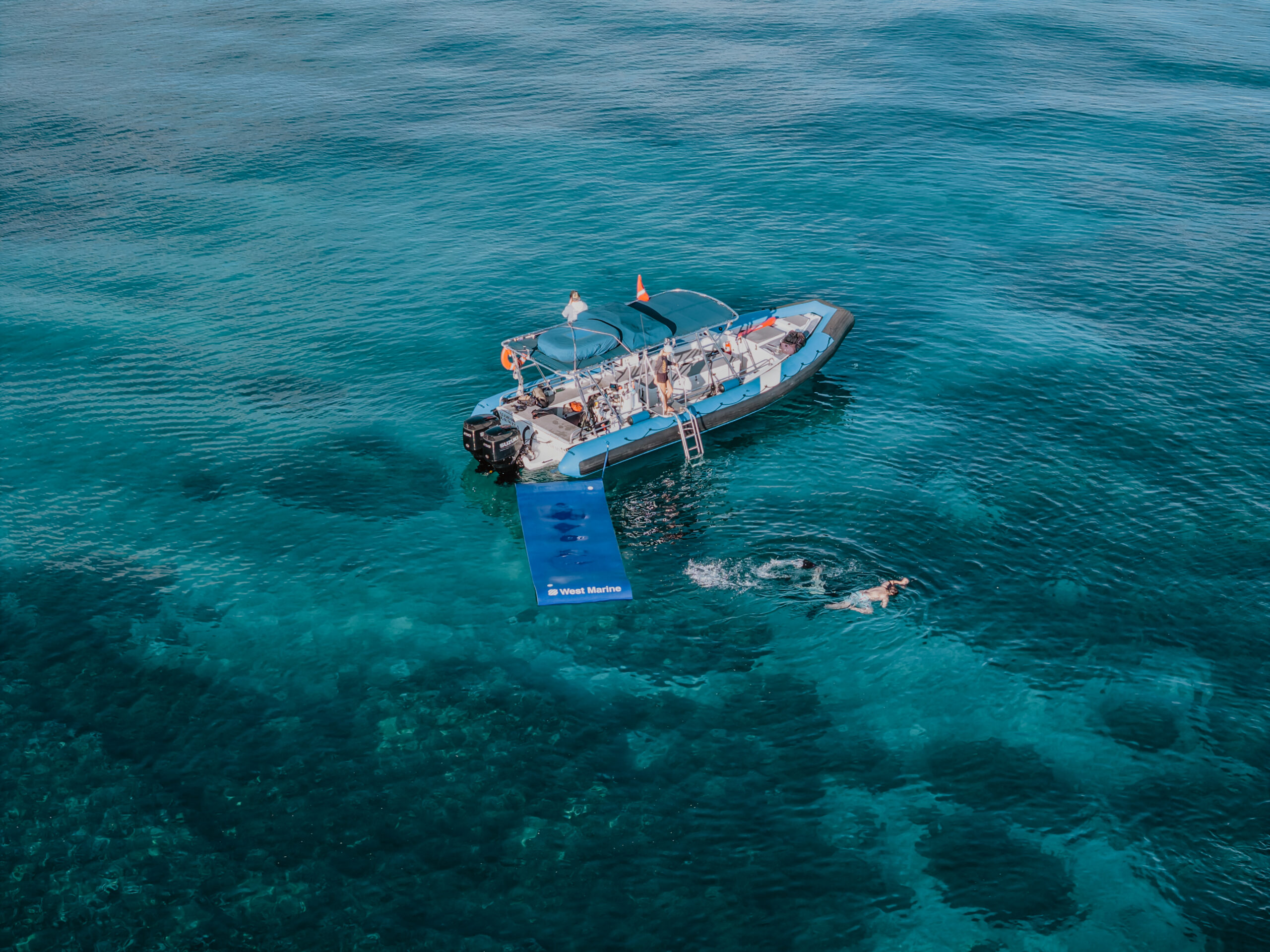
The best way to see Maui’s humpback whale calves is from the water with a crew who knows them, and a small group, eye-level whale watching tour gives you the best view. Hawaii Ocean Rafting is a Native Hawaiian–owned company running small-group eco-raft tours from Lahaina, with more than 30 years of experience watching humpback whale calves grow up in the Au’au Channel. Our rafts sit low to the water for eye-level viewing, and our marine naturalists interpret humpback whale behavior and share Hawaiian stories as you go.
We also support the Keiki Kohola Project’s work protecting Maui’s humpback whale mother-calf pairs, because these gentle giants, and the next generation of them, matter to us.
Ready to meet Maui’s baby humpback whales? Reserve your Maui whale watching tour today.